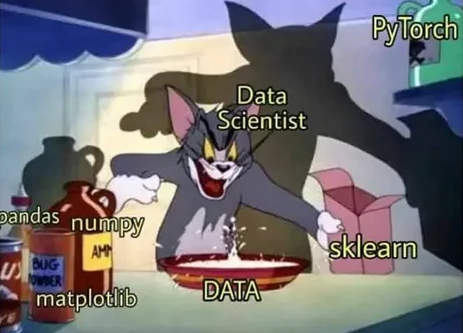
I recently met someone who wants to learn data science - just like I did years ago! This blog post is for you, dear future data scientist.
When I look back at my data science career, I had no problem finding all the learning resources I might need freely accessible on the internet. The problem was actually the opposite - every blog, book, tutorial or tool tried to look like the most important thing in the universe that you definitely need to know. The hardest thing was to correctly prioritize all the topics. So to help you I came up with this list of topics a budding data scientist should learn.
Read more
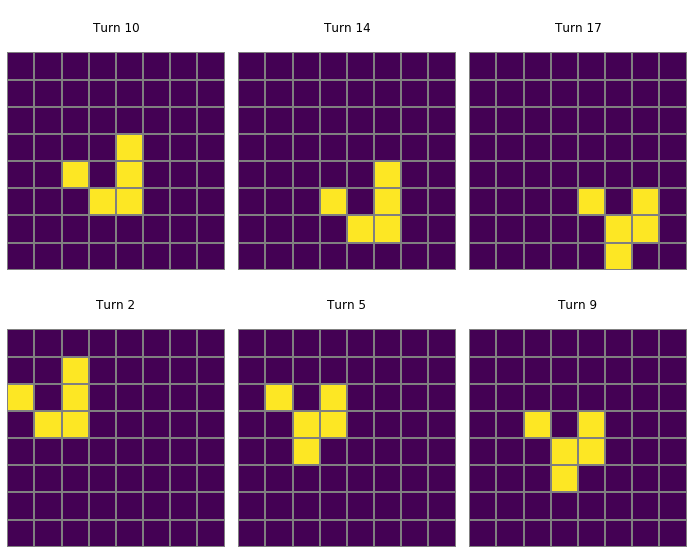
I scrolled past some video thumbnail about playing Conway's Game of life with neural networks, and I have to admit that my first thought was "Pft, that's stupid". I thought that "playing the game" meant actually computing and carying out the game's rules - a task where any use of neural networks would make absolutely no sense. Of course, the video actually turned out awesome, because what it meant by "playing the game" was coming up with interesting patterns - a perfect task for neural networks.
But what if we stuck with the first meaning for a moment, how stupid would that be? A lot, actually. Consider that the weights of the neural network that plays the game can be easily set by hand (as we will see). No amount of stupidness should stop us from doing something interesting though. Who knows, maybe we will learn something new?'
Read more
"Great shirt/jacket/climbing shoes, but it comes only in pink!" That's what a complaint by an outdoors woman in an outdoor shop could sound like. Let's face it: gender stereotypes still hold our society firmly in their grasp. Even the toughest women, with climbs so hard that most men can only dream of being that good, can't easily avoid pink outdoor clothes, even if they wanted to. Supply is simply limited. Or is it?
Read more
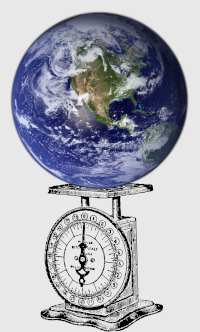
This is one of those wonderfully stupid questions that makes no sense at first glance, but you learn a lot when you think about it for a while. So what does this question even mean? Well, average mass is computed the same way every time: you sum masses of all things in a given category and then divide it by their count. For example average American weighs \(80 \mathrm{ kg}\) and average pineapple around \(2 \mathrm{ kg}\). The average mass of both pineapples and Americans together is approximately \(3,5 \mathrm{ kg}\) (there is simply much more pineapples than Americans). Ok, but we are not interested in some subsets like these, we want the average mass of EVERYTHING! Galaxies, planets, penguins, atoms, quarks! How much will that be?
Hello world! This is my first post at this blog. Over time I will be posting here various comments and articles about travel, science or anything that strikes my fancy at the moment. Some posts will be in english, some in slovak, hopefully most will be in both translations.